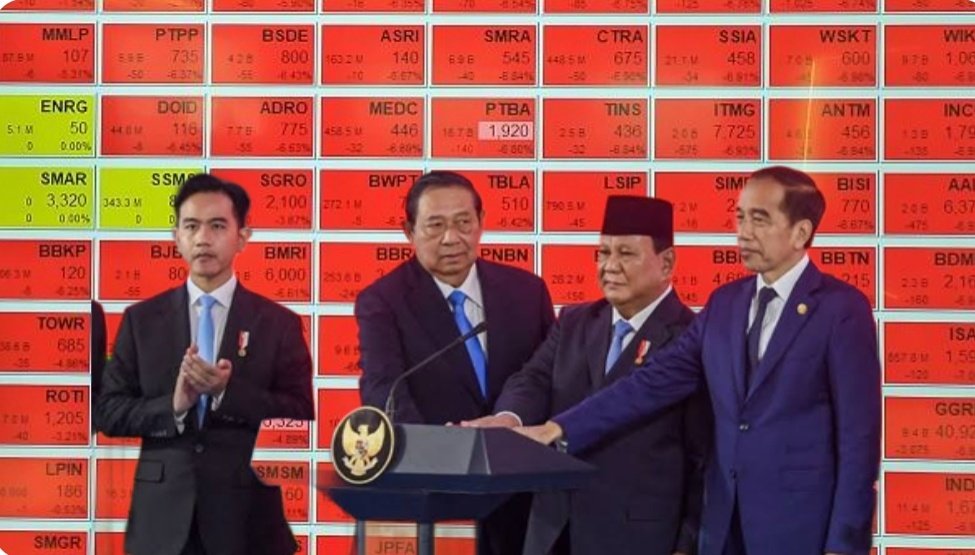
Trading Halt on the Indonesia Stock Exchange (IDX): An In-Depth Analysis
Thu, March 2025 17:44:46
Introduction
The Indonesia Stock Exchange (IDX) plays a vital role in driving the economy. To maintain stability and protect investors from extreme market fluctuations, IDX has a special mechanism known as trading halt. This article will thoroughly discuss what trading halt is, the reasons for its implementation, its impacts, and real-world examples from the Indonesian stock market.
1. What is Trading Halt?
Trading halt is a temporary suspension of trading activities on the stock exchange to prevent market panic or give investors time to digest important information. In the context of IDX, trading halt can be applied to a specific stock or even the entire market if the situation is deemed urgent.
Trading halt usually lasts for 30 minutes, but it can be extended depending on the situation. After this period, trading resumes as usual or switches to trading suspension if conditions haven’t improved.
Simple example:
- If the IHSG (Jakarta Composite Index) drops more than 5% in one session, IDX may decide to temporarily halt trading.
- If a listed company announces critical information that could trigger unusual price spikes, IDX can halt trading on that company’s shares.
2. Reasons IDX Implements Trading Halt
There are several main reasons why IDX applies trading halt. Here’s a detailed explanation:
a) Extreme Index Decline
One of the most common reasons is when IHSG experiences a drastic drop in a short period. IDX has a rule that if IHSG falls more than 5% in one session, the exchange will temporarily halt trading. This aims to:
- Prevent market panic (panic selling).
- Give investors time to calm down and reassess the situation.
- Ensure trading continues in a fair and orderly manner.
b) Significant Material Information
If a company releases material information (such as major acquisitions, shocking financial reports, or negative news), IDX can halt trading on that stock. This ensures:
- Investors have enough time to fully understand the information.
- Prevents excessive price swings driven by emotional reactions.
Example case: If a major company suddenly declares bankruptcy, IDX might temporarily halt trading on its shares to prevent a sharp, uncontrolled drop.
c) Technical Disruptions
IDX can also implement a trading halt if there are technical issues affecting the trading system, such as:
- Server or network problems at the exchange.
- Disruptions to the clearing and settlement system.
This is crucial to maintain market integrity and ensure trading resumes smoothly once the issue is resolved.
d) Extraordinary External Conditions
IDX may also take this step if there are extraordinary external conditions that significantly impact the market, such as:
- Global crises (e.g., COVID-19 pandemic).
- International economic turmoil that spills over into Indonesia.
- Major political events affecting investor sentiment.
3. Impacts of Trading Halt
Trading halt has a significant impact — both positive and negative. Let’s break it down:
a) Positive Impacts
- Prevents Market Panic: By halting trading, investors have time to cool off and think more rationally.
- Allows Time for Information Processing: When major news breaks, trading halt gives the market time to digest the information.
- Protects Retail Investors: Smaller investors who may be slower to access information have an equal chance to act.
b) Negative Impacts
- Disrupts Liquidity: A trading halt can disrupt market liquidity, especially for investors wanting to exit their stock positions.
- Increases Volatility After Reopening: Sometimes, when trading resumes, volatility spikes due to the accumulation of pending orders.
- Creates Negative Market Sentiment: A trading halt can be interpreted as a sign of a market emergency, which may worsen investor sentiment.
4. Real Case Examples of Trading Halt on IDX
To understand better, let’s look at some real-world cases that happened on IDX:
a) COVID-19 Pandemic Case (2020)
In March 2020, at the start of the COVID-19 pandemic, IHSG dropped more than 5%. IDX imposed trading halts several times that month to curb panic. This step was taken because:
- Global investors panicked and withdrew their funds from emerging markets.
- Stock prices plummeted sharply in a short time.
- IDX aimed to maintain stability and prevent a deeper market collapse.
b) Trading System Disruption (2021)
In July 2021, IDX halted trading due to a technical disruption in the trading system. The exchange quickly implemented a trading halt until the issue was resolved. This was done to ensure investors weren’t harmed by inaccurate trading data.
c) Individual Company Cases
There were also trading halt cases applied to specific company stocks. For example, when major issues emerged that could significantly affect stock prices — like corruption allegations or major merger announcements.
5. Comparison with Other Global Stock Exchanges
IDX isn’t the only exchange that implements trading halts. Other major exchanges like the New York Stock Exchange (NYSE), Nasdaq, and Hong Kong Stock Exchange have similar rules. The difference lies in the thresholds and duration of the halt. For example:
- NYSE: Implements a "circuit breaker" if the S&P 500 index drops 7%, 13%, or 20%.
- Hong Kong: Can impose a trading halt on specific stocks or the entire market if there’s a major technical disruption.
Conclusion
Trading halt is a crucial mechanism used by IDX to protect the market from excessive volatility, ensure information is well-digested, and maintain trading order. While it brings positive effects, there are also side effects that need to be anticipated.
As an investor, understanding trading halt helps you make better decisions during market turbulence. Remember, the stock market is a dynamic arena — staying calm and rational is key to surviving and even finding opportunities amid the chaos.
Would you like to dive deeper into strategies for dealing with trading halts as an investor? Or perhaps learn how to spot signals that might trigger the next trading halt? I’m ready to explore more!